2020-2021 Cohort

Ahmad Banki
EconomicsAhmad Banki teaches in the department of economics. He studied at the University of Calgary and McGill. His pedagogical experience and interests include the flipped classroom model, Universal Design for Learning, active learning, and immediate feedback strategies. He has collaborated with a number of communities of learning at Dawson. He has a YouTube channel featuring…

Ahmad Banki
Ahmad Banki teaches in the department of economics. He studied at the University of Calgary and McGill. His pedagogical experience and interests include the flipped classroom model, Universal Design for Learning, active learning, and immediate feedback strategies. He has collaborated with a number of communities of learning at Dawson. He has a YouTube channel featuring his pedagogical instructions and economics lessons. He is also an advanced user of Moodle.

Charles Le Guen
3D Animation & Computer Generated ImageryCharles Le Guen is the Chair of the 3D Animation & CGI department at Dawson College, where he has been teaching since 2013. For over twenty years, Charles has lived and worked around the globe, creating computer-generated visual effects for Hollywood feature films, video game cinematics, high-end television shows, and TV commercials. As a Computer…
Charles Le Guen
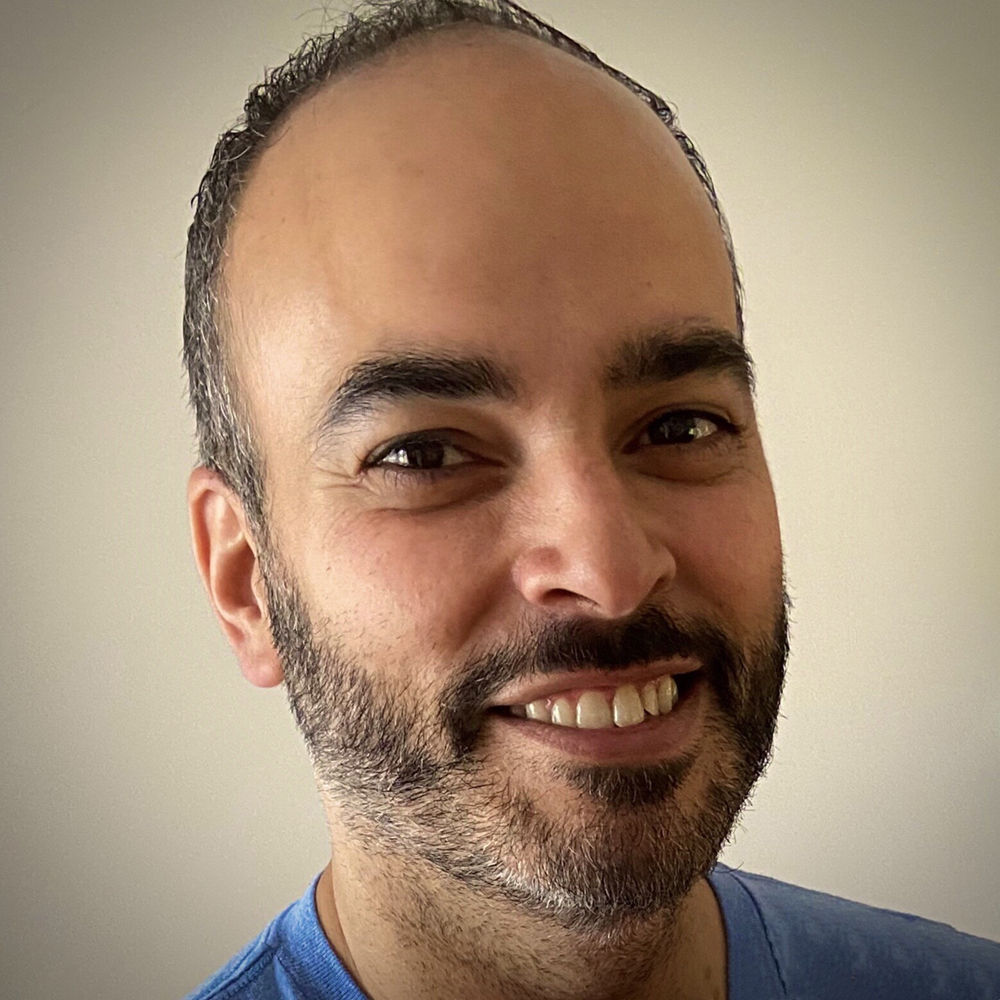
Charles Le Guen is the Chair of the 3D Animation & CGI department at Dawson College, where he has been teaching since 2013.
For over twenty years, Charles has lived and worked around the globe, creating computer-generated visual effects for Hollywood feature films, video game cinematics, high-end television shows, and TV commercials.
As a Computer Graphics Supervisor, Charles has built and managed small, highly-skilled teams. As a technical artist, he is able to script in python, has often worked with beta software and is no stranger to learning new workflows under pressure.
With a University degree in Fine Arts, Charles also has prior experience as a traditional stop-motion animator, and has drawn professionally for numerous TV shows, including Arthur and Animal Crackers.
Charles has lived and worked in New York, Munich, Sydney, Adelaide, Auckland, as well as his home town of Montreal.

Cheryl Simon
Cinema-CommunicationsCheryl’s background and expertise lie in lens and screen based media arts practices. Initially a practitioner, she later became a writer and critic with a particular interest in the affective and political dimensions of amateur media technologies and personal archives. At different times, in different lives she has studied and written about the part played…

Cheryl Simon
Cheryl’s background and expertise lie in lens and screen based media arts practices. Initially a practitioner, she later became a writer and critic with a particular interest in the affective and political dimensions of amateur media technologies and personal archives. At different times, in different lives she has studied and written about the part played by domestic film/photography in the construction of self and group identities (MFA – Studio Arts, Concordia University), the role of popular cultural narratives contesting/negotiating the same (PhD Humanities, Concordia University), the aesthetics of archival and forensic practices in the digital age (Post-Doctoral Fellowship, Visual and Cultural Studies Program, University of Rochester), and, how changes in media forms see corresponding variations in human cognition and perception (ongoing). Her AI project considers the social and cultural implications of proliferating algorithms in the world of online communication, how they impact cultural production, and how they bear on social formation and exchange. Cheryl is currently the Coordinator for the Arts, Literature and Communications Program at Dawson and Co-Chair of the Cinema and Communications Department, where she also teaches.

Daniel Pomerantz
Computer ScienceDan Pomerantz is a faculty member in the Computer Science department. He initially became interested in AI during the Deep Blue vs Garry Kasparov chess matches, where a computer beat the previously unbeatable human chess champion. This was interesting because most analysis felt that Kasparov was better than the computer, but he suffered from two…

Daniel Pomerantz
Dan Pomerantz is a faculty member in the Computer Science department. He
initially became interested in AI during the Deep Blue vs Garry Kasparov chess
matches, where a computer beat the previously unbeatable human chess
champion. This was interesting because most analysis felt that Kasparov was better
than the computer, but he suffered from two human specific problems—fatigue and
emotions. Although early on, this really revealed the potential power an AI system
could have due to a “secret weapon” of consistency.
For the Dawson fellows, Dan is primarily interested in developing course material
related to the ethics of AI. These issues include (but are not limited to!) the ethics of
facial recognition software, targeted advertising, self-driving cars, using cell phone
tracking for epidemiological purposes, and more. Our society is changing rapidly,
and it’s important for citizens to be capable of making informed decisions.

Garry Ka Lok Chu
MathematicsGarry Ka Lok Chu has been teaching at Dawson College for more than a decade. He works as an ambassador to deliver mathematical concepts in an easy fashion, with the primary goal to help students understand basic principles. He explores well-known and interesting daily-life probability questions in his statistics classes. He explains in online lectures…

Garry Ka Lok Chu
Garry Ka Lok Chu has been teaching at Dawson College for more than a decade. He works as an ambassador to deliver mathematical concepts in an easy fashion, with the primary goal to help students understand basic principles.
He explores well-known and interesting daily-life probability questions in his statistics classes.
He explains in online lectures how to interpret timely statistical charts and different mathematical models concerning COVID-19.
He applies his technical knowledge to develop a course to help students appreciate the relationship between Math and Art in a recreational way, using magic squares, for example.
He believes now is an appropriate time to help students solve the mathematical mystery behind AI, or machine learning, based on statistical theory, linear algebra, and calculus.

Gregory Polakoff
HumanitiesGreg has been a faculty member in the Department of Humanities since 2011. Previously, he taught literature and humanities at Simon Fraser University. His graduate training is in comparative literature and Asian studies, and he has written on Nietzsche, critical theory, and modernism. Recently, Greg has been teaching courses in science fiction at Concordia University…
Gregory Polakoff
Greg has been a faculty member in the Department of Humanities since 2011. Previously, he taught literature and humanities at Simon Fraser University. His graduate training is in comparative literature and Asian studies, and he has written on Nietzsche, critical theory, and modernism. Recently, Greg has been teaching courses in science fiction at Concordia University and Dawson, which has inspired him to explore humanity's encounter with artificial intelligence. His research examines how it will transform the way humans construct notions of the self and other, culture, and language. Today, humans are constantly under the observation and scrutiny of AI. How will this relationship affect the way humans comprehend themselves and their relationship to their lifeworld? How will humans coevolve with AI, the planet's newest intelligent species? Will commonplace definitions of life and intelligence transform in the near future? Greg is developing modules for courses––both science fiction and otherwise––that inspire students to explore these immediate questions.

Jennifer Sigouin
SociologyJennifer Sigouin has been teaching Sociology at Dawson College since 2012. She completed her PhD from McGill University specializing in social stratification and quantitative methods. More specifically, she obtained a SSHRC Fellowship to help her investigate the potential wage gap experienced by racialized minorities in Canada. She also taught several courses as a course lecturer…

Jennifer Sigouin
Jennifer Sigouin has been teaching Sociology at Dawson College since 2012. She completed her PhD from McGill University specializing in social stratification and quantitative methods. More specifically, she obtained a SSHRC Fellowship to help her investigate the potential wage gap experienced by racialized minorities in Canada. She also taught several courses as a course lecturer at McGill University, and participated in research projects on migrants’ health. Prior to joining Dawson, Jennifer held multiple job positions ranging from analyst for the United Nations to web manager at UQAM. She is planning to develop a course that would address how traditional and contemporary sociological theories can be applied to the topic of artificial intelligence and, more precisely, to the creation of apps. She is hoping that this project will lay the groundwork for the future objective of bridging different disciplines around the theme of Sociology and Artificial Intelligence.

Vanessa Gordon
Political ScienceVanessa Gordon teaches Politics at Dawson College. Before that, she completed a BA in Politics from McGill and an MA in Comparative Ethnic Conflict from Queen’s University, Belfast. Before coming to Dawson, she worked in numerous countries and in a range of fields, including peacekeeping, crime prevention and international development.Her interest in artificial intelligence stems…

Vanessa Gordon
Vanessa Gordon teaches Politics at Dawson College. Before that, she completed a
BA in Politics from McGill and an MA in Comparative Ethnic Conflict from Queen’s
University, Belfast.
Before coming to Dawson, she worked in numerous countries and in a range of
fields, including peacekeeping, crime prevention and international development.Her interest in artificial intelligence stems from her experience with Canada’s
NetCorps Program, as well as her current involvement in the climate change
movement. Drawing on work undertaken by American political scientist Erica
Chenoweth, as well as MIT's Centre for Civic Media, Vanessa and her students will
explore how to use data to pursue meaningful social change.
2019-2020 Cohort

Bérengère L. Marin-Dubuard
Interactive Media ArtsIn his book On the Mode of Existence of Technical Objects, Gilbert Simondon warns against our tendency to anthropomorphize and present technical objects as antagonistic. He emphasizes the alienation that results in the loss of knowledge about and control of the tools workers have to deal with as craft are industrialized and automation becomes the prevalent mode of production….

Bérengère L. Marin-Dubuard
In his book On the Mode of Existence of Technical Objects, Gilbert Simondon warns against our tendency to anthropomorphize and present technical objects as antagonistic. He emphasizes the alienation that results in the loss of knowledge about and control of the tools workers have to deal with as craft are industrialized and automation becomes the prevalent mode of production. (Mass consumption becomes the purpose of production and the utilitarian aspect of technology is at the forefront of capitalism) but for him (contrasting with Marx’s understanding of alienation) it is the lack of understanding of the workings of technical objects that is at the core of this alienation and loss of agency.
As the curator Natalia Fuchs has pointed out in her recent presentation at Mutek Montreal, artists working with AI take on the role of activists, inventors, and researchers as well. (Fuchs 2019)
Artists who make extensive use of technology in their work often precede technological development by many years.
For example, the very influential artists Steina and Woody Vasulka, the video art pioneers used analogue video feedback to create generative art. Video feedback is now cited as an example of deterministic chaos, and the early explorations by the Vasulkas anticipated contemporary science by many years. The Canadian artist David Rockeby is also at the forefront of technological development as demonstrated in his artwork, “the giver of names” and “Very Nervous System.”
The Russian artist Helena Nikonole provides an understanding of how artists appropriate technological algorithms introduced by scientists and “question machine education which, having penetrated all life spheres, is beginning to impact the world around us.” Nikonole observes that “Mass culture suggests scenarios where artificial intelligence appears as a threatening antagonist of humans and the rise of the machines is the most likely course of events following the technological singularity—a hypothetical moment when machine intelligence overcomes human abilities.”
Media artists, she reminds us, “focus our attention on significantly more crucial issues brought about by machine education based on an artificial neuron (which we imply speaking about artificial intelligence today).
Many artists have critical practices pointing to issues we are faced with as the technology is spreading: i.e., the fixity of norms, racial and other bias, etc. such as Mushon Zer-Aviv and Yonatan Ben Simon normalizing machine. Matthieu Cherubini points to the famous trolley problem and the ethics of automated decisions in his work on “ethical Autonomous Vehicules” and François Quevillon looks at the limitations of computer vision in “Algoryhtmic D ive”. Lauren McCarthy explores the tensions between intimacy and privacy, convenience and agency, and the role of human labour in AI and its potential for the future of automation; Joy Buolamwini points to racial bias embedded in the current AI facial recognition software. Anna Ridler explores speculation in her project Bloemenveiling (2019), interrogating the way technology drives human desire and economic dynamics by creating artificial scarcity. Montreal artist Sofian Audry’s conceptual explorations of AI can also be categorized as speculative explorations. Others like Tom White, François Quevillon, Georgia Ward Dyer and Gregory Chatonsky and the Germano-Japanese artist Hito Steyerl point to the limitation of the tools when recognizing and classifying images. Jason Lewis and Suzanne Kite are working on ethical guidelines for the creation of AI systems based on protocols inspired by Indigenous ontologies that place man “neither as height nor centre of creation”.
As a Dawson.AI fellow, Bérengère will focus on the work of artists that exemplify the issues and potential of machine learning and computerized automation as examples to contextualize the study of technical tools that constitute what is commonly called Artificial Intelligence.
Bérengère L. Marin-Dubuard (aka beewoo) is a media explorer who likes to experiment with perception in the entangled built and digital architecture through photography, motion graphics, live video processing, tangible media and interactivity. Questions related to agency, control, embodiment and perspective as they are affected by technological development are at the roots of these explorations. She has studied the relationship between the history of cybernetics, computer science, artistic practices and architecture.
beewoo has worked on many projects within collaborations such as Battery Operated and Kit Collaboration.
Focusing on Open Source Software, beewoo instigated and ran artistic creation programs such as Autonomy and Activism and Digital Ludology at the media Centre Studio XX in Montréal.
beewoo now also teaches in the Interactive Media Arts (I.M.A.) profile at Dawson College.
Her latest work investigates immersive architectural representation and tangible interfaces at the junction between media arts and games.

Jesse Hunter
Cinema-CommunicationsJesse Hunter is chair of Cincom at Dawson college. His interest in AI dates back to the 80s and he remains a perpetual student of communications technologies, new and old and their social relevance. He did his doctoral thesis exploring a then-emergent virtual reality through the lens of play and dramaturgy. He is now endeavouring to chart…

Jesse Hunter
Jesse Hunter is chair of Cincom at Dawson college. His interest in AI dates back to the 80s and he remains a perpetual student of communications technologies, new and old and their social relevance. He did his doctoral thesis exploring a then-emergent virtual reality through the lens of play and dramaturgy. He is now endeavouring to chart the evolution of AI discourses and how they may help us understand and even redefine ourselves.

Jonathon Sumner
PhysicsJonathon holds a Ph.D. in Mechanical Engineering from the École de technologie supérieure and has been a teacher in the Physics Department since 2005. While his expertise lies in computational fluid dynamics and wind energy, his current passion is in working with large datasets and building interactive data visualizations. Over the past few years, he has…

Jonathon Sumner
Jonathon holds a Ph.D. in Mechanical Engineering from the École de technologie supérieure and has been a teacher in the Physics Department since 2005. While his expertise lies in computational fluid dynamics and wind energy, his current passion is in working with large datasets and building interactive data visualizations. Over the past few years, he has started developing teaching modules in machine learning for students in the Science Program and hopes to expand into other areas related to artificial intelligence. He also helps organize the Coffee ’n’ Code club where students, staff, and faculty can learn Python.

Laurent Ruhlmann
Computer ScienceAs a Dawson.AI fellow, Laurent will develop machine learning curriculum (using Python) for the 360-420-DW option course in the Science Program. He will also work to develop and integrate machine learning competencies for the Computer Science Program. Laurent is a faculty member of the Computer Science department. Before joining Dawson, he has been involved in…

Laurent Ruhlmann
As a Dawson.AI fellow, Laurent will develop machine learning curriculum (using Python) for the 360-420-DW option course in the Science Program. He will also work to develop and integrate machine learning competencies for the Computer Science Program.
Laurent is a faculty member of the Computer Science department. Before joining Dawson, he has been involved in many software development companies, for more than 20 years. He has an extensive knowledge of the computer graphics field, having done research at the NRCC and havingcbeen part of the Softimage Digital Creative software team among many other adventures. Most recently, he worked for Nvidia on the real time ray-tracing team, which contains a machine-learning based de-noising module.
He holds a MsC form the Strasbourg University in Computer Graphics and Remote Sensing, from a time when computers were big, expensive, and very slow.
In his free time he loves cooking, canoeing, and taking care of his grown up kids.

Rebecca Million
EnglishRebecca Million, M.A., teaches courses on myth and monsters, Science Fiction, journalism, and The Lord of the Rings in the English Department at Dawson College. Before coming to Dawson, she worked for CBC Radio One in Montreal. She published on George A. Romero’s Knightriders in the inaugural issue of MONSTRUM in 2018, and she will be a contributor to a companion to…
Rebecca Million
Rebecca Million, M.A., teaches courses on myth and monsters, Science Fiction, journalism, and The Lord of the Rings in the English Department at Dawson College. Before coming to Dawson, she worked for CBC Radio One in Montreal. She published on George A. Romero's Knightriders in the inaugural issue of MONSTRUM in 2018, and she will be a contributor to a companion to Shirley Jackson collection due for publication in 2020.
Rebecca Million (Eng.) and Marjan Heywood (Hum.) will develop a paired Humanities/English course about the ethics of interacting with non-human intelligences. In addition, we intend to launch a podcast where we interview thinkers, artists, and experts of all kinds about AI and its potentialities.
As an AI Fellow, Rebecca Million is working on developing a course in which speculative fiction and theoretical texts will be used to engender discussion around the emotional and psychological effects of dealing with “intelligences” engineered by humans, and the challenges humanity might encounter as we incorporate AI and genetic engineering into our (post-)human future.
Part of Million’s approach will be to explore the history of our interactions with non-human intelligences -- nonhuman animals, Nature, aliens, microbial life forms, etc., as a basis for understanding how we might consciously and conscientiously interact with AI in the future. We will also examine the consequences of our human tendency to create categories and hierarchies within our own species.

Robert Stephens
Humanities, PhilosophyRobert Stephens teaches Philosophy and Humanities at Dawson College, and is the current Coordinator of the ALC Arts & Culture Profile. He has a PhD in Philosophy from McGill University, where is dissertation was focused on defending a computationalist theory of human cognitive architecture, in which problems faced in the development of AI are used…

Robert Stephens
Robert Stephens teaches Philosophy and Humanities at Dawson College, and is the current Coordinator of the ALC Arts & Culture Profile. He has a PhD in Philosophy from McGill University, where is dissertation was focused on defending a computationalist theory of human cognitive architecture, in which problems faced in the development of AI are used to help illuminate how the human mind is organized, and how human cognitive limits may in turn be usefully studied to inspire new designs for artificial minds. In his classes at Dawson, he tries to facilitate student understanding and analysis of the impacts of widespread deployment of autonomous decision-making algorithms/artificial intelligence systems (AIS) with respect to three interrelated areas: potential economic/employment displacement, the essential data literacy and technical competency that all members of society will require, and the need to manage the transition to widespread integration of AIS in a socially beneficial, ethical, and equitable fashion. Before coming to Dawson, Robert was a High School English and Drama teacher. In his spare time, he builds custom electric guitars and ukuleles.

Sameer Bhatnagar
PhysicsI have been teaching Physics at Dawson College for 10 years, and have been an officer of the Science Program for almost as long. As part of an introductory computational modeling course, I have helped develop teaching modules for students on topics including reproducible research and the basics of machine learning. part of my work…

Sameer Bhatnagar
I have been teaching Physics at Dawson College for 10 years, and have been an officer of the Science Program for almost as long. As part of an introductory computational modeling course, I have helped develop teaching modules for students on topics including reproducible research and the basics of machine learning. part of my work in the DawsonAI initiative is helping with the Coffee 'n Code club. I am also in the final year of a PhD program at École Polytechnique, where my research lies in applications of Natural Language Processing and Learning Analytics.